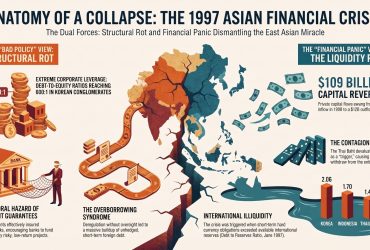
सन् १९९७ को मध्यतिर 'एसियाली पाँच' (थाइल्याण्ड, इन्डोनेसिया, दक्षिण कोरिया, मलेसिया र फिलिपिन्स) का अर्थतन्त्रहरू विश्वव्यापी विकासको अग्रपंक्तिमा थिए। 'एसियाली चमत्कार' (Asian Miracle) को रूपमा चिनिने यी देशहरूमा जीवनस्तर र आर्थिक वृद्धिमा नाटकीय सुधार देखिएको थियो। जुन १९९७ सम्मको प्रक्षेपणले यस क्षेत्रमा ७ प्रतिशतको स्वस्थ आर्थिक वृद्धिको संकेत गरेको थियो। तर, जुलाई १९९८ सम्म आइपुग्दा यो तथ्याङ्क नाटकीय रूपमा परिवर्तन भई ५ प्रतिशतको मन्दी (-5% GDP growth) मा परिणत भयो। यो 'एसियाली मोडेल' सुरुवाती चरणमा औद्योगिकीकरणका लागि एक असाधारण सफलता (Spectacular success) सावित भएको थियो, जसले गर्दा अर्थतन्त्रमा भित्रभित्रै सुरु भएको क्षयीकरणलाई धेरैले ठम्याउन सकेनन् र अन्ततः यही मोडेल नै संकटको प्रमुख बाहक बन्यो।

A rating-based grading system one that is structured, transparent, and grounded in reliable data provides a clearer and more holistic alternative. By translating diverse performance indicators into a standardized score, such a system makes branch performance easier to understand, benchmark, and track over time, enabling management to identify strengths, address gaps, and drive continuous improvement more effectively.

आजको आधुनिक अर्थतन्त्रमा बैंकिङ प्रणालीलाई सुरक्षित र स्थिर मानिन्छ, तर यसको भित्री संरचनामा धेरै अदृश्य जोखिमहरू लुकेका हुन्छन्। क्रेडिट जोखिम, सञ्चालन जोखिम, तरलता समस्या, प्रविधि र साइबर जोखिम तथा कमजोर नियमनजस्ता कारणहरूले बैंकिङ क्षेत्रलाई गम्भीर संकटतर्फ धकेल्न सक्छन्। यी जोखिमहरू समयमै नबुझ्दा यसको प्रभाव केवल बैंक सीमित नरही सम्पूर्ण वित्तीय प्रणाली र राष्ट्रिय अर्थतन्त्रमा फैलिन सक्छ। बैंकिङको अदृश्य जोखिमहरू के हुन्, तिनले कसरी असर गर्छन् र कसरी प्रभावकारी रूपमा व्यवस्थापन गर्न सकिन्छ भन्नेबारे यो लेखले विश्लेषणात्मक र व्यावहारिक दृष्टिकोण प्रस्तुत गर्दछ।

Streamlining Loan Classification with an Automated Excel UDF Tool As per Nepal Rastra Bank’s Directive No. 2, loans are categorized based on the number of overdue days to ensure effective credit risk management. The classifications are as follows: Good (up to 30 days overdue), Watchlist (31–90 days), Substandard (91–180 days), Doubtful (181–365 days), and Bad Loan (over 365 days). To simplify this process, the Excel UDF (User Defined Function) Tool automatically determines the appropriate loan category based on the due days and reporting date entered by the user. This tool minimizes manual calculation errors, saves time, and ensures accurate and compliant loan classification for financial institutions.